Mircea Alexadru MATEESCU
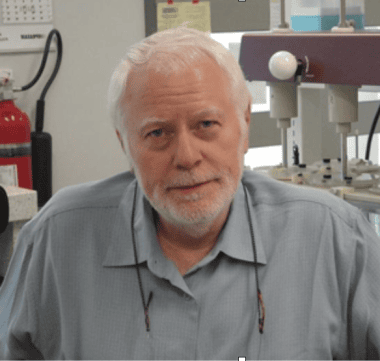
Mircea Alexandru Mateescu graduated in Chemistry-Biochemistry from University of Bucharest and earned a PhD from Bucharest Polytechnic University and an “Honorary Laurea” of Rome University “Sapienza”. He is Full Professor of Biochemistry at the Université du Québec à Montreal (UQAM) Canada. He was frequently invited as visiting professor at Rome University “Sapienza” and at Université Sorbonne - Paris Nord.
His expertise: i) self-assembled materials as pharmaceutical excipients for controlled drug delivery and as biomaterials for implants, xenografts or biotechnological applications, and ii) therapeutic copper-enzymes for treatments of inflammatory and oxidative damaging conditions.
As main achievements: more than 300 articles, 38 patents, one book, 11 book chapters and launching of Contramid®/Cross-Linked Starch - Drug Delivery: a patented technology.
Awards: ACFAS – Josef-Armand-Bombardier Prize for Technological Innovation in Canada (1999); Prize Venezia: Italian Chamber of Commerce for major contributions to science and collaboration with italian universities (2012); Prize “Career in research” Faculty of Sciences – UQAM (2014); ARA Award of Excellence: American Romanian Academy of Arts and Sciences, in recognition of "outstanding academic achievements and valuable contributions to the promotion of science, research and development" (2019) and several others.
h-index 38 on Scopus.
Abstract
Multifunctional self-assembled Polyvinylalcohol materials for biomedical applications
Mircea Alexandru Mateescu1, Wilms Baille1, Grisel Luna Saavedra1, Diana Averill2
1 Department of Chemistry and CERMO-FC Centre, Faculty of Science, Université du Québec à Montréal,
Montreal (Québec) H3C 3P8, Canada. Contact-author e-mail: mateescu.m-alexandru@uqam.ca
2 Department of Biological Science and CERMO-FC Centre, Faculty of Science, Université du Québec à
Montréal, (Québec) H3C 3P8, Canada. Contact-author e-mail: averill.diana_alison@uqam.ca
Introduction. Severe hepatic failure generates many deaths and the main solution to counteract this drastic condition is liver transplant. However, only 10% of the patients needing a liver transplant receive an organ. Since hepatocytes account for about 80% of the liver's mass and exert most of its metabolic functions, their well-tailored three-dimensional aggregates are considered representative of liver tissue [1][2].
The isolated hepatocytes may lose their viability and metabolic functions, limiting their possibility of use for clinical, biopharmaceutical, engineering and research purposes.
We are now proposing a new series of functionalized scaffolds based on polyvinyl alcohol (PVA) cross-linked by sodium trimetaphosphate (STMP) using an original two step method.
Experimental. A volume of 100 mL of PVA (10 % solution) was first cross-linked with sodium trimeta-phosphate (STMP) at 20% (conventional degree). Various scaffolds based on PVA derivatives were prepared in the same conditions but also adding galactose, collagen, chitosan or modified starch (CM-Starch). Scaffold strips were placed into 12 well plates and seeded with isolated Rat (Sprague-Dawley) hepatocytes (2 x 10⁶ cells/strip). The obtained scaffolds were characterized by SEM, Solid state NMR, and viability of cell aggregates was established with the Lactate dehydrogenase (LDH) activity released in the medium.
Resultants & Discussions. The proposed method produces high porous matrices (≥ 70 %) with a porosity distribution between 50-1000 μm.
The re-organization of the cells as aggregates inside the connected pores generates certain aspects as a tissue-like structures.
The addition of chitosan induced a higher efficiency of cellular adhesion in the 3D PVA microenvironment.
Fig 1 - Top view of PVA-STMP-CMS
Scaffolds with aggregates at 48h after inoculation of 106 hepatocytes (SEM voltage 15-30 kV)
Conclusions. The porous scaffolds were able to retain hepatocytes as aggregates (more than 80% adhesion) and viability of more than 50% (superior to the values reported for the 2D cultured cells.
References.
[1] Gevaert E., Dollé L., ... Cornelissen R. High Throughput Micro-Well Generation of Hepatocyte Micro-Aggregates for Tissue Engineering. PLOS ONE 2014, 9(11): e114315.
[2] Saavedra YGL, Mateescu MA, Averill-Bates DA, Denizeau F. Polyvinylalcohol three-dimensional matrices for the improved long-term dynamic culture of hepatocytes. J Biomed Mater Res A 2003; 66: 562-570.
BiomMedD' 2026
All rights reserved © copyright by biommedd.ro