Nicanor CIMPOESU
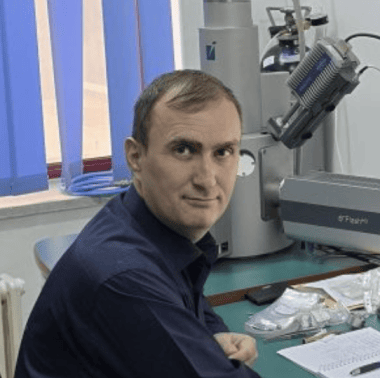
Nicanor Cimpoesu, Ph.D., Habil. Full Professor, Department of Materials Science, Gheorghe Asachi Technical University of Iași. Vice Dean of Materials Science and Engineering Faculty, Technical University Gheorghe Asachi from Iasi, Erasmus coordinator of Materials Science and Engineering Faculty and coordinator of ESIM laboratory (https://esimsim.ro/). Born / Nationality: Romania. Received Ph.D. (Engineering) in 2010, with a thesis investigating the internal friction properties of metallic shape-memory alloys. Achieved habilitation (habilitation degree) in 2018, affirming full professorship, Phd students coordinator since 2019 with 3 doctors confirmed. Authored approximately 235 scientific publications (ResearchGate) garnered about 1412 citations on ResearchGate, and around 1800 citations on Google Scholar. The author has the H factor 19 in 2025 (WoS), 20 (1716 citations on Google Scholars and Scopus. Published more than 10 technical content books (like Active Materials for Medical Applications, Corrosion Resistance Enhancement of Materials Surface, Automotive Brake Disc Materials). Coordinated four national and International research projects like the European Horizon 2020 project CeLaTeBa(SURPF2301300009), focusing on microstructure of materials, biodegradable metallic materials, corrosion resistance and smart materials. Participated in more than 30 national research projects, including: development of high-entropy alloy-based materials for tooling (PN-II-PT-PCCA-2013-4-1048), fabrication of high-damping thin shape memory films via pulsed laser deposition (PN-II-RU-PD-2011-3-0186). CNATDCU member since 2024, reviewer for different ISI Journals, editor of ASTR journal.
Abstract
ELECTRO-CHEMICAL CORROSION BEHAVIOR OF Zn-BASED ALLOYS FOR MEDICAL APPLICATIONS
Ramona Cimpoesu, Tiberiu Șutic, Romeu Chelariu, Gheorghe Bădărău, Mihai Axinte, Nicanor Cimpoesu
1 Materials Science Department, Materials Science and Engineering Faculty, Technical University Gheorghe Asachi from Iasi, Blv. Mangeron , 700050, Iasi, Romania, nicanor.cimpoesu@academic.tuiasi.ro
Introduction. Zinc-based alloys have emerged as a promising class of biodegradable materials for temporary medical implants, filling the degradation rate gap between magnesium and iron-based alloys [1]. This study focuses on the chemical and electrochemical corrosion behavior of a newly developed Zn-based alloy system, evaluated under simulated physiological conditions.
Experimental. The chemical degradation was assessed through immersion tests in various media, including Dulbecco’s Phosphate Buffered Saline (10xDPBS), Ringer’s solution, and Simulated Body Fluid (SBF) at 37°C.
Results and Discussion. Results indicated a multi-stage degradation process characterized by the initial formation of a passivation layer consisting mainly of zinc phosphates (Zn3(PO4)2), simonkolleite (Zn5(OH)8Cl2·H2O), and carbonates. Chemical analysis revealed that the addition of Mg and Y promotes the formation of a more stable and compact corrosion product layer, which effectively regulates the ion release rate into the surrounding environment. Electrochemical investigations, including Potentiodynamic Polarization (PDP) and Electrochemical Impedance Spectroscopy (EIS), were employed to determine the corrosion kinetics. The polarization curves exhibited typical active-passive behavior, with corrosion currents (Icorr) indicating a moderate degradation rate (0.12–0.25 mm/year), suitable for bone healing timelines. EIS data revealed that the corrosion mechanism is controlled by charge transfer and mass transport through the porous layer of corrosion products. The presence of intermetallic phases, such as Mg2Zn11 and YZn12, was found to initiate localized micro-galvanic cells, influencing the overall pitting resistance [2].
Conclusions. Zn-Mg-Y alloys demonstrate a controllable corrosion behavior dictated by the synergistic effect of their chemical composition and the protective nature of the precipitated surface layers. These findings support the potential of Zn-based alloys as viable candidates for biodegradable orthopedic fixations [3].
Acknowledgement: This work was supported by a grant of the Ministry of Education and Research, CCCDI-UEFISCDI, project number PN-IV-P6-6.1-CoEx-2024-0102 within PNCDI IV.
.
References.
[1] Yang, H.; Jia, B.; Zhang, Z.; Qu, X.; Li, G.; Lin, W.; Zhu, D.; Dai, K.; Zheng, Y. Alloying design of biodegradable zinc as promising bone implants for load-bearing applications. Nature Communications (2020) 11, 401.
[2] Panaghie, C.; Cimpoes,u, R.; Istrate, B.; Cimpoes,u, N.; Bernevig, M.A.; Zegan, G.; Roman, A.M.; Chelariu, R.; Sodor, A. New Zn3Mg-xY Alloys: Characteristics, Microstructural Evolution and Corrosion Behavior. Materials 2021b, 14, 2505.
[3] Prakasam, M., Locs, J., Salma-Ancane, K., Loca, D., Largeteu, A., Bezina-Cimdina, L., Biodegradable Materials and Metallic Implants—A Review. Funct. Biomater. 2017, 8(4), 44.
BiomMedD' 2026
All rights reserved © copyright by biommedd.ro