Iuliana BIRU
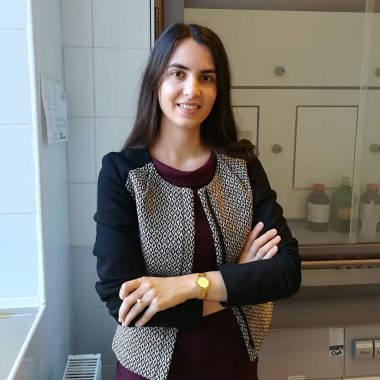
Dr. Elena Iuliana Bîru is Associate Professor in the Department of Bioresources and Polymer Science at the Faculty of Chemical Engineering and Biotechnology, National University of Science and Technology Politehnica Bucharest. She received her PhD in Chemical Engineering in 2020. Her academic and research career has been closely connected to advanced polymer science, sustainable materials, and nanotechnology.
Dr. Bîru has been actively involved in numerous national and international research projects, serving in roles ranging from research assistant and postdoctoral researcher to project director. Her recent projects include the development of smart hydrogels for cancer therapy, sustainable self-healing polymeric materials for electronics, and polymeric nanovectors for gene therapy applications. She has also contributed to Horizon Europe initiatives in biomedical engineering and advanced functional materials.
Her expertise includes polymer synthesis and characterization, graphene functionalization, advanced spectroscopic and microscopic techniques, and the development of multifunctional biomaterials. Dr. Bîru has authored more than 30 scientific publications and presented her research at leading international conferences in Europe and the United States.
In addition to her research activities, Dr. Bîru plays an active role in academic leadership and international collaboration. Since 2024, she has served as Director of the Advanced Polymer Materials Group, coordinating the group’s research strategy, human resources, logistics, and scientific visibility.
Abstract
Ultrafast-Gelling Multifunctional Hydrogels for Integrated Self-Healing and Strain-Sensing Applications
Cosmin Gabriel Pauliuc1, Ana-Roxana Stefan1, Elena Iuliana Bîru1,2* , Horia Iovu1,2,3
1 Advanced Polymer Materials Group, National University of Science and Technology Politehnica Bucharest, 1-7 Gh. Polizu Street, 011061, Bucharest, Romania, iuliana.biru@upb.ro
2 Research Institute of the University of Bucharest (ICUB), University of Bucharest, 91-95 SplaiulIndependentei, 050095, Bucharest, Romania
3 Academy of Romanian Scientists, 54 Splaiul Independentei, 050094, Bucharest, Romania
Introduction Wearable sensors and next-generation flexible bioelectronics have progressed rapidly thanks to advances in stimuli-responsive, or “smart,” materials. Among these, hydrogels stand out as ideal interfaces between electronic devices and the human body due to their intrinsic biocompatibility, tunable viscoelastic properties, and tissue-like softness. In particular, strain-sensitive hydrogels can reliably translate mechanical deformations into measurable signals, making them key components for continuous physiological monitoring and motion tracking—from subtle facial movements and pulse detection to large-scale joint motion.
Despite these advantages, it remains challenging to engineer hydrogels that simultaneously offer high stretchability, strong strain sensitivity, self-healing capability, and long-term electrical stability under repeated mechanical stress. To address this limitation, we developed a semi-interpenetrating polymer network (semi-IPN) hydrogel that leverages the structural synergy between a flexible synthetic polyacrylamide (PAM) network and a rigid biopolymer, carboxymethyl cellulose (CMC).
Experimental. Vanillin (VA) was first grafted onto CMC via a coupling approach while preserving free aldehyde groups to enable dynamic Schiff base interactions, as confirmed by FTIR and NMR. A semi-IPN hydrogel was then formed by acrylamide polymerization initiated with a KPS/FeSO₄ redox system in the presence of CMC-VA.
Gelation kinetics were evaluated by tube inversion and rheology, while frequency sweeps assessed viscoelastic behavior. Mechanical properties (tensile strength and elongation at break) were tested to determine structural integrity. Electro-mechanical sensing performance was analyzed by coupling an LCR meter with a universal testing machine, enabling real-time monitoring of resistance changes (ΔR/R₀) under dynamic strain.
Results and Discussion. Structural analyses confirmed successful vanillin grafting onto CMC and the formation of a stable semi-IPN network. The hydrogels exhibited tunableviscoelasticity with high strength and stretchability. Electromechanical tests showed sensitive, repeatable resistance changes (ΔR/R₀), enabling real-time monitoring of joint motions such as finger, elbow, and knee flexion.
Conclusions. A highly promising tissue-mimicking material for flexible bioelectronics is produced by the synergistic integration of the vanillin-modified CMC within the PAM network. This platform provides the mechanical resilience and electromechanical sensitivity needed for real-time human motion monitoring.
BiomMedD' 2026
All rights reserved © copyright by biommedd.ro