Marius MANOLE
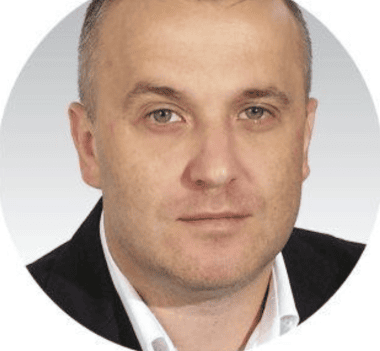
Marius Manole, DDS, PhD, Associate Professor of Propedeutic and Esthetic Dentistry, Department of Prosthetics and Dental Materials, Faculty of Dentistry, University of Medicine and Pharmacy „Iuliu Hatieganu” Cluj-Napoca, Vice Dean – Academic, Management and Development, I graduated the Faculty of Dentistry UMF Cluj-Napoca in 2001, holds a PhD in Medicine and a Master degree in implant supported prosthesis and radio-diagnosis course. More then 20 years experience in dental prosthetics, dental esthetics and implant supported prothesis. Professional and Scientific activities : 1 books published as co –autor, more then 40 papers published in extenso, many scientific presentations and paper published as abstract in the proceeding of international conferences, invited speaker at several national scientific meetings, reviewer for several specialty scientific journals. Also, he was involved in various research projects focused on dental biomaterials. Research interest: prosthetic dentistry, prosthetic on implants, esthetic dentistry, dental biomaterials, digital dentistry.
PROFESSIONAL EXPERIENCE
Associate Professor | 2019 – present
Department of Prosthetics and Dental Materials, “Iuliu Hațieganu” UMPh, Cluj-Napoca.
Course holder: Technology of Removable Prostheses (DM 3rd year), Complete Dentures and Skeletal Partial Dentures (DT 3rd year). Clinical training for 2nd, 3rd and 5th year students. Residency supervision; postgraduate courses.
Vice-Dean – Academic Management & Development | 2019 – present
Faculty of Dental Medicine, “Iuliu Hațieganu” UMPh, Cluj-Napoca.
Member of the Academic Senate | 2023 – present
“Iuliu Hațieganu” UMPh, Cluj-Napoca.
Dental Practitioner / Practice Administrator | 2004 – present
SC Vivadent SRL, Cluj-Napoca. Implant-supported prosthetics, aesthetic dentistry; practice management.
EDUCATION AND TRAINING
Habilitation in Dental Medicine | 2025
“Iuliu Hațieganu” UMPh, Cluj-Napoca.
Doctor of Medical Sciences (PhD) | 2013
“Iuliu Hațieganu” UMPh. Thesis: Periodontal tissue modifications induced by different types of fixed partial dentures. Supervisor: Prof. Dr. Dorin Borzea.
Competence in Implantology | 2012 – 2013
Dental Education Center, Timișoara.
Postgraduate Course in Dental Radio-Diagnostics | 2004 – 2005
“Iuliu Hațieganu” UMPh, Cluj-Napoca.
Doctor of Dental Medicine (DMD) | 1995 – 2001
“Iuliu Hațieganu” UMPh. Preclinical and clinical disciplines.
ISI PUBLICATIONS
ResearchGate
WOB
RESEARCH INTERESTS
Prosthetic dentistry, implant-supported prosthetics, aesthetic dentistry, dental biomaterials, digital dentistry.
PROFESSIONAL AFFILIATIONS
• CMSR – Romanian College of Dental Physicians
• ARACIS – Romanian Agency for Quality Assurance in Higher Education (Expert Member)
• SSER – Society of Sciences and Aesthetics in Romania
• SRB – Romanian Society of Biomaterials
• ESCD – European Society of Cosmetic Dentistry
Abstract
Digital versus Conventional Workflows in Prosthodontics and Implant Dentistry: A Comparative Analysis of Accuracy & Time
Manole Marius
“Iuliu Hațieganu” University of Medicine and Pharmacy, Faculty of Dental Medicine, Cluj-Napoca, Romania
The integration of digital technologies in prosthodontics and implant dentistry has fundamentally
transformed clinical workflows over the past two decades. From intraoral scanning and CAD/CAM fabrication to computer-guided implant surgery and 3D-printed surgical templates, digital tools now compete with — and increasingly complement — long-established conventional techniques. However, the question of when digital workflows offer measurableclinical and economic advantages over conventional ones remains incompletely answered.
Objective: This presentation provides an evidence-based comparative analysis of digital and conventional workflowsacross the principal stages of prosthodontic and implant treatment, evaluating their performance on two pivotal dimensions: clinical accuracy and treatment time.
Methods:
Outcomes evaluated include trueness and precision of digital versus conventional impressions, marginal and internal fit of CAD/CAM versus conventionally fabricated restorations, linear and angular deviation in computer-guided versus freehand implant placement, chair-side and laboratory time, and treatment cost analyses including learning-curvemconsiderations.
Conclusions: Digital and conventional workflows are not mutually exclusive; current evidence supports a stratified,hybrid approach in which clinical indication, case complexity, and operator expertise determine the optimal pathway.
The transition from analog to digital must be guided by outcome-driven evidence rather than technological enthusiasm.
Keywords: Digital workflow; Conventional workflow; CAD/CAM; Computer-guided implant surgery; Intraoral scanning;Prosthodontics; Implant dentistry; Accuracy.
BiomMedD' 2026
All rights reserved © copyright by biommedd.ro